
5 Common Conveyor Maintenance Mistakes and how to fix them
Conveyors are the backbone of many warehouses, distribution centres, and manufacturing facilities. A well-maintained conveyor system ensures smooth operations, reduces downtime, and extends equipment lifespan. However, common maintenance mistakes can lead to costly repairs and disruptions.
This guide covers the five mistakes CSL’s ConveyorCare engineers see most frequently – in systems of all ages, sizes and manufacturers – along with the early warning signs your team can look for and the practical steps to address each one before it becomes a costly failure
1. Ignoring Preventative Maintenance
The mistake: Many operations only call an engineer after a failure has already occurred. By the time a component fails visibly, the developing fault has often been present for weeks – causing progressive damage to surrounding components that a timely inspection would have caught for a fraction of the cost.
Warning signs your team can look for:
- Unusual noise from rollers, bearings or drives – grinding, squealing or knocking not previously present
- Visible vibration in conveyor frames or supporting steelwork during operation
- Increased motor temperature or unexpected motor overload trips
- Products arriving misaligned, damaged or at inconsistent intervals – a sign of inconsistent belt or roller performance
- An increasing frequency of minor jams or stoppages that seem to sort themselves out
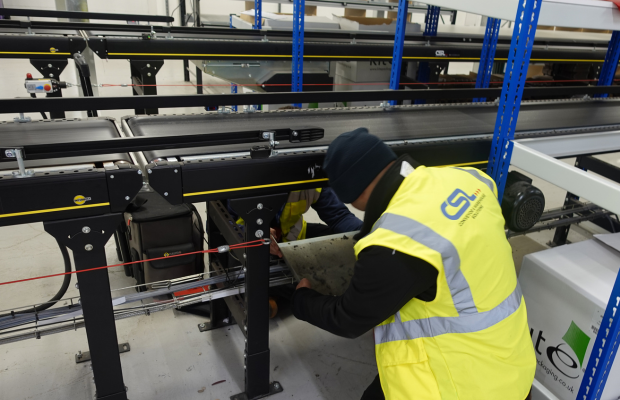
The fix: Implement a structured Planned Preventative Maintenance (PPM) schedule – quarterly or biannual for most operations, more frequently for high-throughput or safety-critical systems. Each visit should cover mechanical inspection, lubrication, alignment checks and produce a written condition report with prioritised recommendations. CSL ConveyorCare mechanical servicing programmes are available one to four times per year, open to any conveyor system regardless of original manufacturer.
The cost of getting it wrong: A single unplanned stoppage lasting four to eight hours – including idle labour, emergency call-out fees and lost throughput – often exceeds the full annual cost of a planned maintenance contract.
Contact ConveyorCare
Thank you for your interest in CSL Automation and ConveyorCare
We don’t just design and install high-performance systems, we keep them running at their best. Our dedicated ConveyorCare and maintenance expertise ensures your equipment stays reliable, efficient, and ready to support your business as it grows.
Start your conveyor maintenance journey today
2. Using the Wrong or Worn-Out Parts
The mistake: Replacing worn-out components with incorrect or substandard parts – whether due to availability, cost pressure or simple misidentification – compromises efficiency, accelerates wear and in some cases creates safety hazards. This is particularly common when sourcing parts urgently during a breakdown.
Warning signs your team can look for:
- Unusual noise or vibration appearing shortly after a replacement – often indicates incorrect component specification
- Accelerated wear on the new component relative to what you’d expect from the original
- Reduced system speed or throughput following a repair
- Belt or chain tension requiring more frequent adjustment than usual after a part swap
- Visual mismatch – components that appear similar but have slightly different dimensions or load ratings.
The fix: Always use manufacturer-recommended or specification-matched replacement parts. For CSL-installed systems, CSL’s aftersales team can supply correct parts by model and part number. For third-party systems, CSL can also assist with parts identification and supply – your team does not need to rely solely on the original installer for sourcing. Holding a recommended on-site spares inventory for high-wear components reduces the pressure to source urgently during a breakdown.
The cost of getting it wrong: Incorrect parts can cause secondary damage to adjacent components – turning a low-cost replacement into a significantly larger repair scope, or a scheduled service visit into an emergency call-out.
3. Neglecting Belt Tracking and Tensioning
The mistake: Misaligned or incorrectly tensioned conveyor belts cause uneven wear, reduce system efficiency and – if left unaddressed – lead to premature belt failure, product damage and, in the case of belt conveyors, the risk of friction-induced heat build-up. Tracking and tensioning issues are among the most common causes of avoidable belt replacement.
Warning signs your team can look for:
- Belt consistently walking to one side – indicates misalignment in idlers, pulleys or the belt itself
- Fraying or edge wear on one side of the belt
- Belt slipping under load – typically indicates undertension
- Belt cupping, curling or dishing – often caused by moisture exposure or incorrect tensioning
- Squealing or chirping from the drive pulley area – a common indicator of undertension
- Product spillage or misalignment at transitions – tracking issues affecting product control
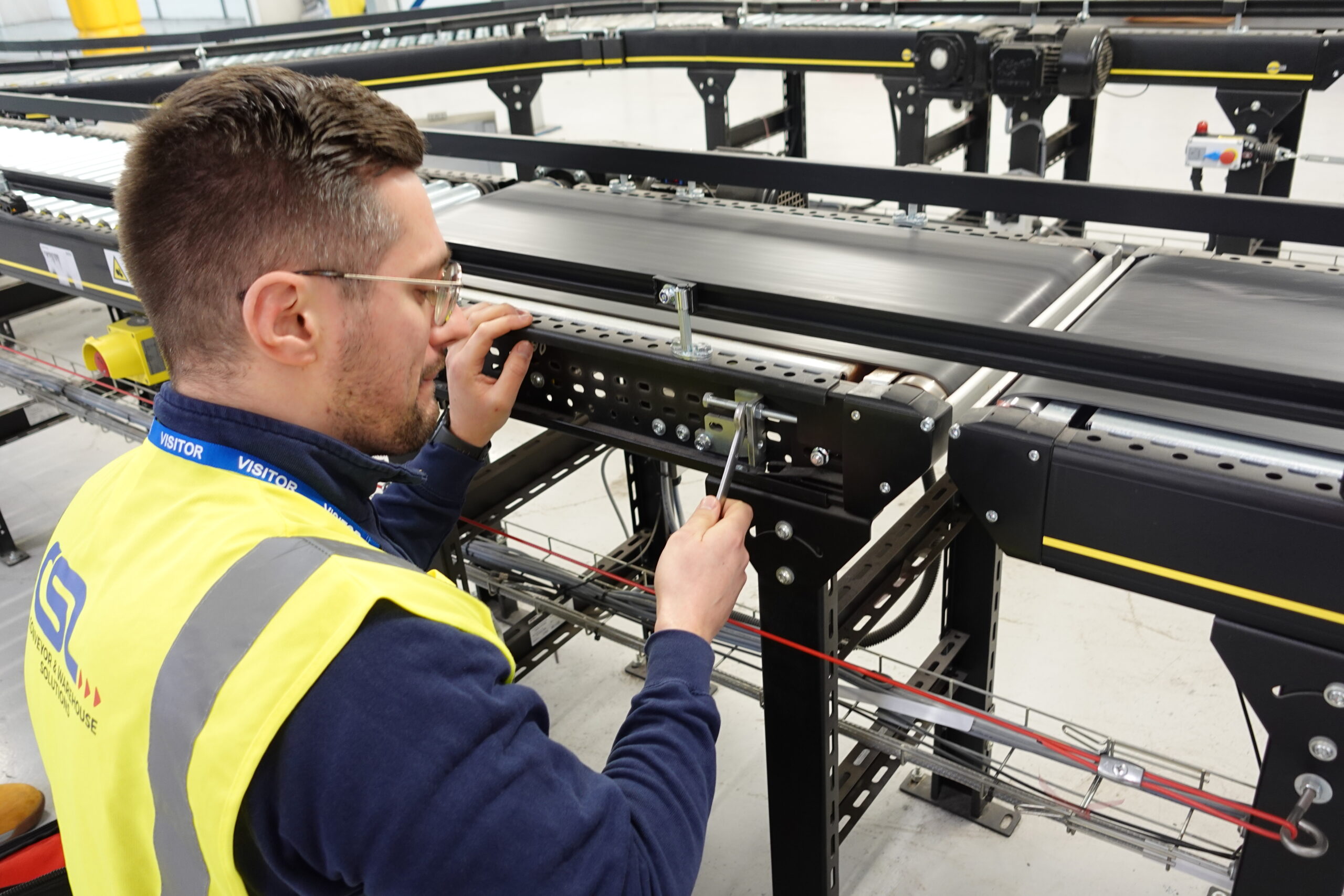
The fix: Belt tension should be checked both with the system running under load and at rest – correct tension tolerances differ between these states. Tracking checks should be conducted across the full belt run, not just at the drive pulley. For modular belts, roller conveyors and flat belt systems, the diagnostic approach and adjustment method differ. If in doubt, consult a CSL ConveyorCare engineer before making adjustments that could cause further misalignment or damage.
The cost of getting it wrong: Sustained belt misalignment can cause full belt replacement to be needed several times sooner than expected. In belt conveyors, friction from a severely misaligned or slipping belt can generate enough heat to present a fire risk.
4. Failing to Clean and Lubricate Components
The mistake: Debris accumulation and insufficient lubrication are among the leading contributors to premature bearing and roller failure. What is often less understood is that over-lubrication causes its own problems – excess grease attracts debris, blocks drainage paths and can contaminate products in food or pharmaceutical environments.
Warning signs your team can look for:
- Audible change in bearing noise – dry bearings typically produce a high-pitched tone distinct from normal operation
- Heat build-up at bearing housings – warm to the touch during operation is normal; hot is a warning sign
- Increased power consumption on drive motors – indicative of added friction within the system
- Debris accumulation at specific zones along the conveyor – indicates where product spillage or component wear is occurring
- Grease weeping from bearing housings – a sign of over-lubrication rather than correct maintenance
- Rollers that appear clean externally but rotate with resistance – internal contamination
The fix: Implement a routine cleaning and lubrication schedule using manufacturer-specified lubricants at manufacturer-specified intervals. Generic multi-purpose greases applied at inconsistent intervals are a common cause of premature failure. Your system’s PPM schedule should define lubricant specification, application points and quantities – CSL’s service reports document this for each system visited, giving your engineering team a clear reference for interim maintenance between service visits.
The cost of getting it wrong: Bearing replacement is one of the most frequent outcomes of inadequate lubrication maintenance. In high-density roller conveyor sections, a cluster of seized bearings can require significant downtime to replace – particularly if secondary damage to surrounding components has occurred.
5. Overloading the Conveyor System
The mistake: Operating a conveyor beyond its rated load capacity – whether through increased product weight, higher induction rates or product accumulation – places excessive strain on motors, belts, drives and the structural frame. This is particularly common during peak trading periods.
Warning signs your team can look for:
- Repeated motor overload trips – the system’s first line of protection against excessive load
- Belt stretching at a faster rate than expected between services
- Drive chain elongation requiring more frequent tensioning adjustments
- Unusual heat from gearboxes, particularly under sustained high load
- Frame distortion or fastener loosening at high-load zones and transitions
- Increased accumulation pressure in zero-pressure zones – product backing up beyond design parameters
The fix: Adhere to the manufacturer’s rated load capacity for all system components. Where increased throughput is a genuine business requirement, the right solution is a properly assessed system upgrade – not running existing equipment beyond its design limits. CSL can evaluate your current system and recommend targeted upgrades, additional sortation capacity or resequencing of induction to achieve throughput targets safely.
The cost of getting it wrong: Systematic overloading compresses maintenance intervals and accelerates component wear across the entire system – not just in areas of highest loading.

Quick-Reference: The 5 Mistakes at a Glance
1. Ignoring PPM – Watch / listen for unusual noise, vibration, motor trips or inconsistent product flow
2. Wrong or worn parts – Warning signs include: Post-repair noise, accelerated wear, reduced throughput
3. Belt tracking / tensioning – Watch out for belt walking, edge fraying, slipping under load, drive pulley squeal
4. Poor cleaning / lubrication – Warning signs are: Bearing noise change, heat at housings, increased power draw
5. Overloading – Be aware of: Motor trips, belt stretch, gearbox heat, frame fastener loosening
When to Call a Professional
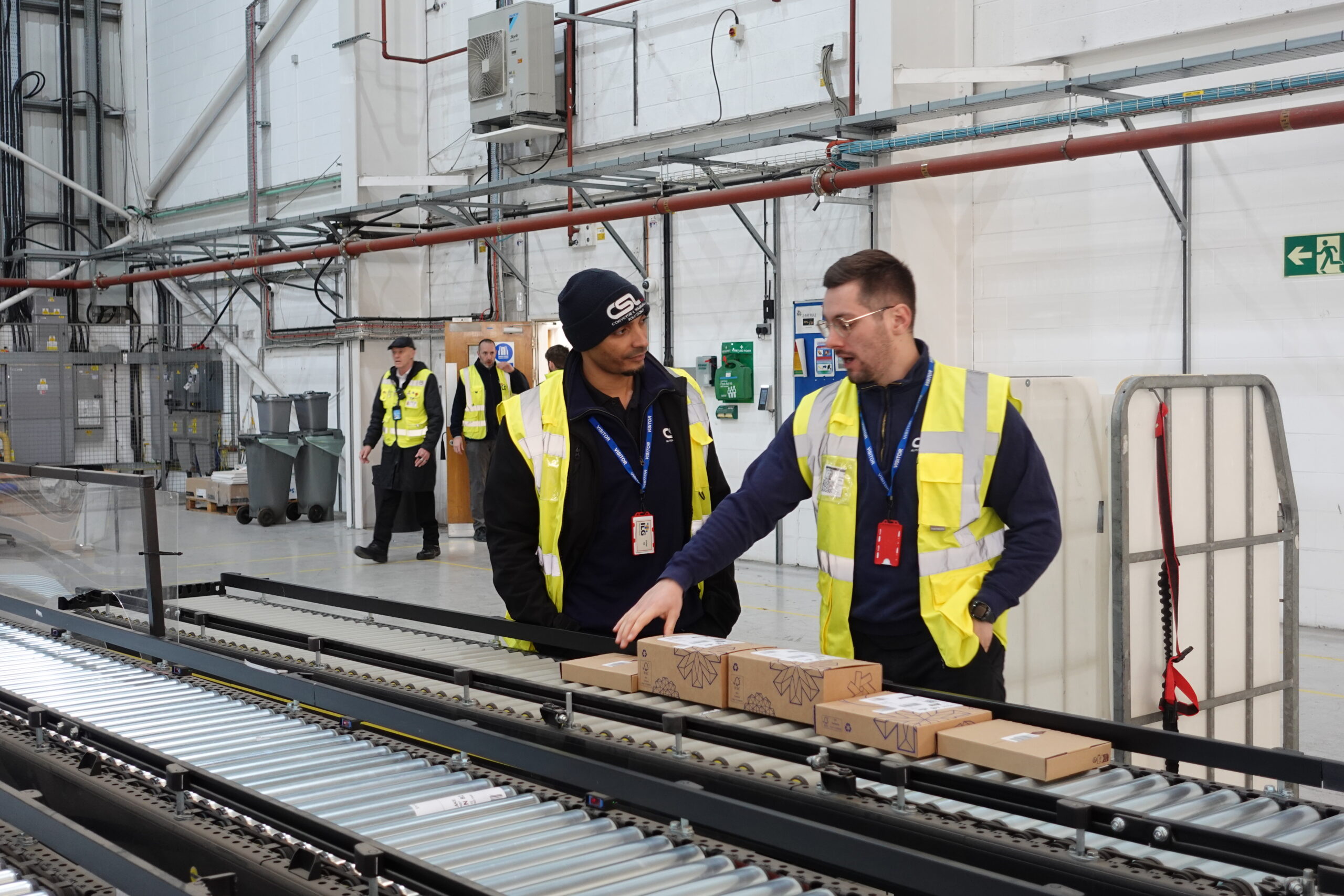
Your engineering team can and should carry out interim visual checks between planned service visits – monitoring for the warning signs above, checking belt tracking, listening for changes in bearing noise and watching for shifts in system performance. Your team knows your system better than anyone.
Where CSL’s ConveyorCare engineers add value alongside your in-house team:
- Structured PPM inspections – a fresh set of experienced eyes across the full system, with written documentation
- Fault diagnosis on complex or intermittent problems where the root cause isn’t immediately clear
- Belt replacement, bearing replacement and drive servicing where access or specialist tooling is a constraint
- Parts identification and supply for both CSL-installed and third-party systems
- Post-incident inspections – assessing secondary damage following an unplanned stoppage
- System modifications and upgrades where throughput or configuration requirements have changed
CSL works alongside your engineering team – not as a replacement for it. Our ConveyorCare programmes are designed to complement your in-house capability, not override it.
Keep Your System Running – Without the Surprises
Proper conveyor maintenance is the difference between a system that performs at peak efficiency for its full operational life and one that costs significantly more to run, repair and ultimately replace. The five mistakes above are all avoidable – and in most cases, the early warning signs are detectable with the right knowledge and the right inspection routine.
If you’d like CSL’s ConveyorCare team to assess your system – whether CSL installed it or not – contact us for a no-obligation consultation. We’ll tell you what we find, not what we think you want to hear.
Explore ConveyorCare | Book a System Assessment | The Cost of Conveyor Downtime
Contact ConveyorCare
Thank you for your interest in CSL Automation and ConveyorCare
We don’t just design and install high-performance systems, we keep them running at their best. Our dedicated ConveyorCare and maintenance expertise ensures your equipment stays reliable, efficient, and ready to support your business as it grows.
Start your conveyor maintenance journey today
