

Addressing Labour Shortages with Automation | Warehouse Solutions | CSL
Why Labour Shortages Are Hitting Warehousing Hard
Warehousing has always relied heavily on manual labour, particularly for picking, packing, and material movement. But a growing body of industry data shows that this labour-intensive model is under increasing strain. According to the 2023 MHI Annual Industry Report, 57 % of supply chain leaders identified difficulty hiring and retaining qualified workers as a top challenge – a trend that has direct operational consequences including delayed shipments and reduced productivity.
An ageing workforce is reducing the pool of experienced operatives, while younger workers are less likely to view warehouse roles as long-term careers. At the same time, rising living costs and wage inflation are increasing pressure on margins. Seasonal demand spikes, especially in e-commerce, further exacerbate recruitment challenges by requiring rapid short-term scaling. On the ground, those shortages have tangible effects. In the UK, industry reporting highlighted that warehouses were forced to offer wage increases of up to 30 % simply to attract basic entry-level staff during peak seasons, underscoring how severe recruitment shortfalls have become.
For many businesses, the issue is no longer cost alone, but availability. Vacant roles can lead directly to missed dispatch cut-offs, delayed orders, and reduced customer satisfaction.
Automation as a Strategic Response to Labour Shortages
Automation offers a practical and scalable response to labour shortages by reducing reliance on manual handling and repetitive tasks. Conveyor systems, sortation technology, and integrated automation allow warehouses to maintain throughput even when labour availability is limited.
Rather than focusing on headcount reduction, automation shifts labour toward higher-value roles such as supervision, quality control, and exception handling. This improves job satisfaction while reducing physical strain and fatigue.
CSL approaches automation as a strategic enabler – helping businesses stabilise operations today while creating a platform for future growth.
Labour Shortages as a Structural Challenge
Labour shortages are no longer a short-term disruption for the warehousing, logistics, and manufacturing sectors.
They have become a structural challenge driven by demographic change, rising wage pressure, skills gaps, and increasing competition for workers across supply chains., but for many warehouse operators, recruiting and retaining sufficient labour is now one of the biggest barriers to growth. At the same time, customer expectations continue to rise; faster delivery, greater accuracy, and higher service levels are expected as standard, particularly in eCcommerce fulfilment. This combination of reduced labour availability and increased operational demand places warehouses under unprecedented strain.
Automation has emerged as one of the most effective and sustainable ways to address labour shortages. Rather than replacing people, well-designed automation enables warehouses to do more with fewer resources, supporting existing staff while building resilience for the future.


How Conveyor Automation Reduces Labour Dependency
Conveyor systems play a central role in reducing labour intensity across warehouse operations by automating the movement of goods between receiving, storage, picking, packing, and dispatch; meaning conveyors eliminate unnecessary travel time and manual handling.
In many warehouses, operatives spend a significant portion of their shift simply moving items from one location to another. Automation removes this inefficiency, allowing smaller teams to process higher volumes with greater consistency.
Modern conveyor systems also support zone-based operation, ensuring energy and system usage aligns precisely with demand – improving both labour efficiency and sustainability.
Discover how CSL conveyor systems support leaner warehouse operations
Addressing Labour Shortages in E-Commerce Fulfilment
E-commerce fulfilment centres are particularly exposed to labour shortages due to high order volumes, fast turnaround times, and complex returns processes. During peak periods, the challenge of recruiting and training temporary staff can place significant operational risk on the business.
Automation enables e-commerce warehouses to absorb demand fluctuations without proportionally increasing labour. High-speed sortation, automated routing, and integrated conveyor systems ensure orders flow smoothly through the facility, even with reduced staffing levels. CSL works closely with e-commerce operators to design automation solutions that support accuracy, speed, and scalability while reducing reliance on temporary labour.
Further insight can be found on CSL’s e-commerce sector page.
Improving Productivity Without Increasing Headcount
One of the key advantages of automation is its ability to unlock productivity gains without expanding the workforce. Automated material handling systems operate consistently, do not fatigue, and maintain performance across long shifts and peak periods. By removing bottlenecks and standardising workflows, automation ensures that each operative contributes maximum value. This is particularly important in tight labour markets, where recruiting additional staff may not be feasible.
Automation also reduces training time, as staff interact with structured, repeatable processes rather than ad-hoc manual workflows.
Book a warehouse automation assessment with CSL

Speak to CSL about reducing labour dependency in your warehouse
Why Labour Shortages Are Hitting Warehousing Hard
Warehousing has always relied heavily on manual labour, particularly for picking, packing, and material movement. But a growing body of industry data shows that this labour-intensive model is under increasing strain. According to the 2023 MHI Annual Industry Report, 57 % of supply chain leaders identified difficulty hiring and retaining qualified workers as a top challenge – a trend that has direct operational consequences including delayed shipments and reduced productivity.
An ageing workforce is reducing the pool of experienced operatives, while younger workers are less likely to view warehouse roles as long-term careers. At the same time, rising living costs and wage inflation are increasing pressure on margins. Seasonal demand spikes, especially in e-commerce, further exacerbate recruitment challenges by requiring rapid short-term scaling. On the ground, those shortages have tangible effects. In the UK, industry reporting highlighted that warehouses were forced to offer wage increases of up to 30 % simply to attract basic entry-level staff during peak seasons, underscoring how severe recruitment shortfalls have become.
For many businesses, the issue is no longer cost alone, but availability. Vacant roles can lead directly to missed dispatch cut-offs, delayed orders, and reduced customer satisfaction.
Automation as a Strategic Response to Labour Shortages
Automation offers a practical and scalable response to labour shortages by reducing reliance on manual handling and repetitive tasks. Conveyor systems, sortation technology, and integrated automation allow warehouses to maintain throughput even when labour availability is limited.
Rather than focusing on headcount reduction, automation shifts labour toward higher-value roles such as supervision, quality control, and exception handling. This improves job satisfaction while reducing physical strain and fatigue.
CSL approaches automation as a strategic enabler – helping businesses stabilise operations today while creating a platform for future growth.
Labour Shortages as a Structural Challenge
Labour shortages are no longer a short-term disruption for the warehousing, logistics, and manufacturing sectors.
They have become a structural challenge driven by demographic change, rising wage pressure, skills gaps, and increasing competition for workers across supply chains., but for many warehouse operators, recruiting and retaining sufficient labour is now one of the biggest barriers to growth. At the same time, customer expectations continue to rise; faster delivery, greater accuracy, and higher service levels are expected as standard, particularly in eCcommerce fulfilment. This combination of reduced labour availability and increased operational demand places warehouses under unprecedented strain.
Automation has emerged as one of the most effective and sustainable ways to address labour shortages. Rather than replacing people, well-designed automation enables warehouses to do more with fewer resources, supporting existing staff while building resilience for the future.


Enhancing Health, Safety, and Staff Retention
Labour shortages are closely linked to retention challenges. Physically demanding, repetitive tasks increase the risk of injury, absenteeism, and staff turnover., but automation can directly address these issues by reducing manual lifting, long walking distances, and repetitive strain.
Safer, more ergonomic workplaces improve staff wellbeing and help businesses retain experienced operatives. In turn, this reduces recruitment pressure and the hidden costs associated with high turnover. CSL designs automation systems with safety and ergonomics in mind, ensuring technology supports people rather than replacing them.
Automation and Skills are Shifting, Not Eliminating, Roles
A common misconception is that automation removes the need for people, but in reality, it changes the nature of warehouse roles. As manual tasks are automated, new opportunities emerge in system oversight, maintenance, data analysis, and process optimisation. This shift allows businesses to upskill existing staff, creating more stable and rewarding career paths. In a competitive labour market, offering skilled, technology-enabled roles can be a significant advantage.
CSL supports clients through this transition, ensuring automation integrates smoothly with workforce planning.
Retrofitting Automation to Tackle Labour Challenges
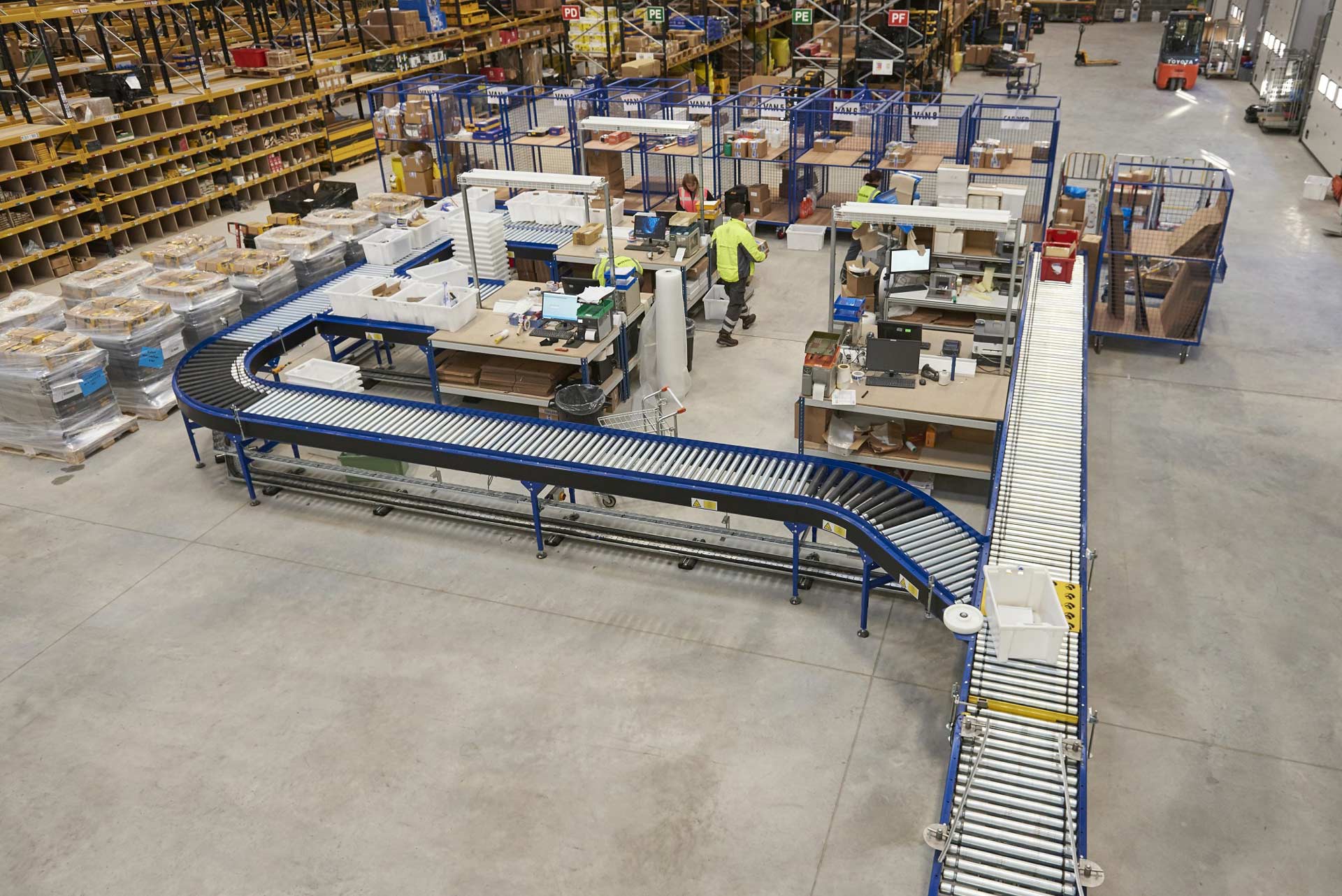
Addressing labour shortages does not always require a brand-new facility or full system overhaul. Many automation solutions can be retrofitted into existing warehouses, delivering meaningful improvements with minimal disruption. Typical retrofit projects include adding conveyor lines to reduce travel time, upgrading sortation to improve throughput, or integrating automated controls to streamline workflows. These targeted upgrades allow businesses to reduce labour dependency incrementally.
Long-Term Cost Stability in a Tight Labour Market
While automation requires upfront investment, it provides long-term cost stability in an environment of rising wages and labour scarcity. Automated systems deliver predictable performance and operating costs, reducing exposure to recruitment volatility.
Over time, this stability supports better planning, improved service levels, and stronger profitability. When viewed across the full lifecycle of a warehouse, automation often delivers a compelling return on investment.
CSL’s Approach to Labour-Resilient Automation
CSL takes a collaborative approach to automation, working closely with clients to understand operational pressures, workforce constraints, and growth ambitions. Rather than offering one-size-fits-all solutions, we design systems that align with real-world labour challenges.
From initial concept and design through to installation and long-term support, CSL helps businesses build warehouses that are resilient, efficient, and adaptable.
Our solutions are supported by engineering expertise and ongoing partnership – ensuring automation continues to deliver value as labour markets evolve.
The Future of Warehousing in a Labour-Constrained World
Labour shortages are unlikely to ease in the near future. Warehouses that rely solely on manual processes will face increasing risk, while those that invest in automation will be better positioned to compete.
Future-ready warehouses will combine automation, data, and skilled people to deliver consistent performance regardless of labour availability. Addressing labour shortages with automation is not about replacing the workforce – it is about creating a more sustainable operating model.
Take the Next Step with CSL
If labour shortages are limiting your warehouse performance, automation offers a proven path forward. Whether you operate an e-commerce fulfilment centre, logistics hub, or manufacturing facility, CSL can help you reduce labour dependency while improving productivity and resilience.
Explore more insights in the CSL Knowledge Hub, learn how CSL supports e-commerce operations, or speak directly to a conveyor specialist about your automation strategy.
Discuss your Maintenance Requirements
Thank you for your interest in CSL Automation. As one of the UK’s leading conveyor and automation integrators, we can help maintain your automation system.
Start your automation journey today.
