

Top 5 automation hardware tools transforming modern factories
Automated conveyor and routing systems
Automated conveyor and routing systems are critical for moving materials efficiently across the production floor. These systems transport products between different stages of manufacturing, packaging, and distribution with minimal human intervention.
Advanced sortation and decision-making interface technology can automatically identify, route, and organise items based on size, weight, or destination. This improves throughput, reduces handling errors, and ensures a smooth, continuous flow of goods, particularly in high-volume operations.

Programmable Logic Controllers (PLCs)
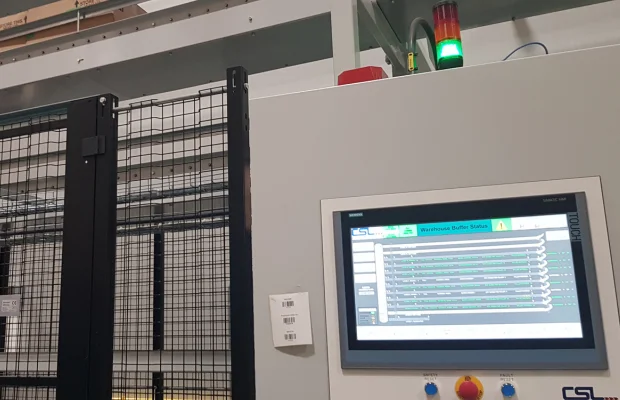
Programmable Logic Controllers (PLCs) are the core control units of industrial automation systems, acting as the critical link between physical machinery and higher-level factory management systems such as SCADA, MES, and ERP platforms. Designed for durability, these industrial computers operate reliably in demanding environments where heat, dust, and vibration are common.
PLCs continuously monitor input signals from machines and sensors, process logic-based instructions, and trigger outputs to control equipment. Beyond direct machine control, they play a key role in system integration by collecting operational data and communicating it to supervisory and enterprise systems. This enables real-time visibility into production performance, equipment status, and process efficiency.
Through industrial communication protocols such as Modbus, Profinet, and Ethernet/IP, PLCs facilitate seamless data exchange across the factory floor. This connectivity allows factory management systems to optimise scheduling, support predictive maintenance, and improve decision-making based on live production data.
By bridging the gap between shop-floor operations and digital management systems, PLCs ensure not only efficient machine control but also a fully connected and responsive manufacturing environment.
Autonomous Mobile Robots (AMRs)
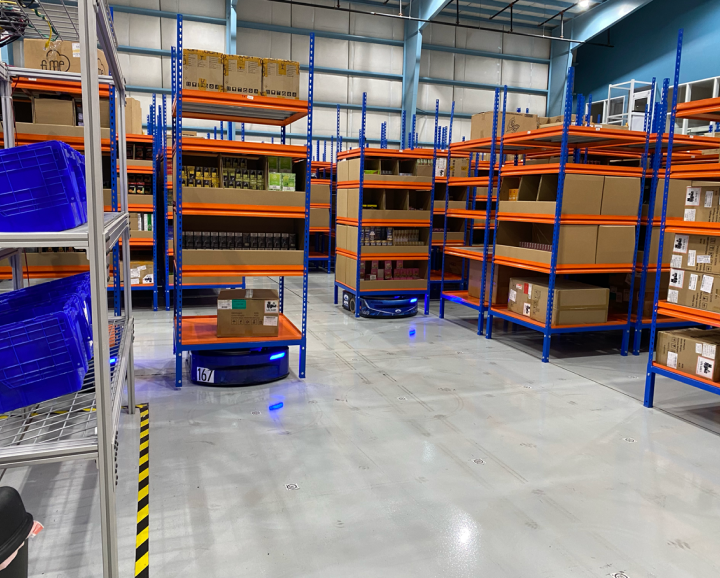
Autonomous Mobile Robots (AMRs) are intelligent, flexible robots that navigate factory floors without fixed paths. Using sensors, cameras, and mapping technology, AMRs can dynamically adapt to their environment and avoid obstacles in real time.
They are commonly used for transporting materials, delivering components to workstations, and supporting just-in-time manufacturing processes. Their flexibility allows manufacturers to scale operations quickly without major infrastructure changes.
Automated Guided Vehicles (AGVs)
Automated Guided Vehicles (AGVs) are mobile robots used to transport materials along predefined routes within a facility. Unlike AMRs, AGVs typically rely on guidance systems such as magnetic strips, wires, or laser tracks.
AGVs are highly reliable for repetitive transport tasks, such as moving pallets, raw materials, or finished goods between stations. They improve workplace safety, reduce manual handling, and ensure consistent material flow across the operation.
Final thoughts
Automation hardware is at the heart of modern industrial efficiency. From PLCs controlling machinery to advanced robotic systems managing movement and storage, these technologies work together to streamline operations and enhance productivity.
As manufacturing continues to evolve, investing in the right combination of automation hardware will be key to improving performance, scalability, and long-term competitiveness.
Discuss your Maintenance Requirements
Thank you for your interest in CSL Automation. As one of the UK’s leading conveyor and automation integrators, we can help maintain your automation system.
Start your automation journey today.
