
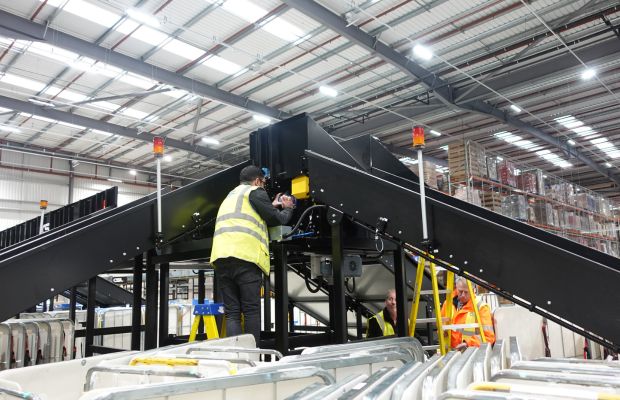
Warehouse automation downtime: The hidden cost undermining your ROI
Warehouse automation systems are no longer a competitive advantage, they are a necessity. But when those systems fail, the financial and operational consequences can escalate rapidly.
Downtime is often underestimated as a short-term disruption. In reality, it is a multi-layered business risk affecting revenue, customer relationships, workforce safety, and long-term competitiveness.
The real cost of downtime: More than lost output
Most organisations calculate downtime as “lost production per hour.” While useful, this only scratches the surface.
Industry analysis shows downtime costs are typically 5–10x higher than initial estimates due to cascading effects across operations.
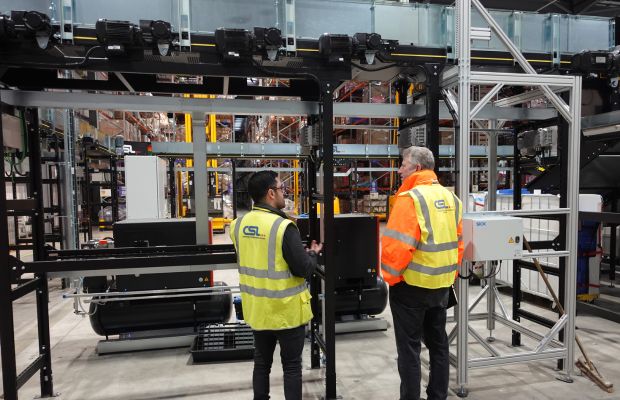
Below are the true cost drivers in a warehouse automation environment:
Lost revenue & throughput
When automation systems fail:
- Orders stop processing
- Goods stop moving
- Revenue generation halts immediately
Even a single bottleneck (e.g. a conveyor or picking system) can reduce overall warehouse capacity significantly.
Labour inefficiency & overtime costs
Downtime does not stop labour costs:
- Staff remain on payroll while idle
- Maintenance teams are diverted to reactive fixes
- Overtime is required to recover backlog
One hour of downtime can trigger multiple hours of additional labour cost due to recovery efforts

Lost customers & reputational damage
Delayed orders lead to:
- Missed delivery SLAs
- Customer complaints and refunds
- Long-term loss of trust
Downtime doesn’t just delay shipments, it erodes customer confidence and future revenue streams
Health & safety risks
Automation failures often force:
- Manual workarounds
- Increased handling of goods
- Rushed recovery operations
This increases:
- Workplace accidents
- Fatigue-related errors
- Compliance risks
In many warehouses, downtime correlates directly with higher incident rates and unsafe behaviours.
Supply chain disruption
Warehouses sit at the centre of the supply chain. When they stop:
- Upstream suppliers are blocked
- Downstream deliveries are delayed
- Transport schedules are disrupted
Even minor disruptions can cascade across the entire supply network
Hidden operational costs
These are often overlooked:
- Restart inefficiencies and recalibration losses
- Scrap, mis-picks, and inventory errors
- Expedited shipping to recover delays
These “invisible” costs frequently exceed the initial production loss.
The business case for resilience
Research shows industrial downtime can cost hundreds of thousands per hour, with large facilities reaching significantly higher figures .
Yet many organisations still treat downtime as a maintenance issue rather than a strategic risk.
How CSL Solutions Help Eliminate Downtime Costs (with Mechanical PPM & SLA Focus)
CSL (Critical Connectivity & Resilience Solutions) play a key role in reducing warehouse automation downtime—not just through technology, but by supporting planned maintenance (PPM) strategies and helping businesses meet strict SLA commitments.

- Supporting Mechanical PPM Through System Visibility
Effective Planned Preventative Maintenance (PPM) relies on knowing when systems are under stress or at risk of failure—not just reacting after breakdowns occur.
Where CSL adds value:
- Provides continuous system visibility alongside mechanical operations
- Helps identify irregular performance trends that may indicate wear or failure risk
- Supports better scheduling of mechanical maintenance before breakdowns occur
Outcome:
- Fewer unplanned mechanical failures
- Better alignment between engineering teams and operations
- Reduced reactive maintenance costs
- Enabling SLA-Driven Uptime
Warehouse operations are increasingly governed by strict Service Level Agreements (SLAs), where downtime directly impacts penalties, customer satisfaction, and contractual performance.
Where CSL adds value:
- Ensures operational continuity through resilient connectivity
- Maintains system availability during network or infrastructure disruptions
- Supports consistent throughput and fulfilment targets
Outcome:
- Improved SLA compliance
- Reduced financial penalties from downtime
Greater confidence in meeting customer commitments
Reducing Downtime Through Faster Response & Recovery
Downtime costs are driven not just by failures, but by how long systems stay offline.
Where CSL adds value:
- Early warning of issues before full system failure
- Faster fault identification to support engineering teams
- Enables remote diagnostics to reduce delays in intervention
Outcome:
- Reduced Mean Time to Detect (MTTD)
- Reduced Mean Time to Repair (MTTR)
- Lower total cost of downtime events
- Bridging Mechanical and Operational Risk
Many warehouse failures originate from a combination of mechanical wear and operational blind spots, not just system faults.
Where CSL adds value:
- Provides a consistent layer of operational oversight
- Ensures critical systems remain connected and visible
- Supports a proactive, risk-based maintenance approach
Outcome:
- Shift from reactive firefighting to proactive maintenance
- Reduced risk of cascading failures
- Improved overall equipment effectiveness (OEE)
Business Impact: From Cost Centre to Operational Advantage
By supporting both mechanical PPM and SLA performance, CSL helps organisations move beyond simply “keeping systems online.”
Result:
- Lower total downtime costs (planned + unplanned)
- More predictable operations
- Stronger customer retention and service reliability
Warehouse automation downtime is not just an operational inconvenience, it is a critical business risk with exponential cost impact.
Contact CSL Automation today to find out how we can help you avoid these operational costs through automation.
Discuss your Maintenance Requirements
Thank you for your interest in CSL Automation. As one of the UK’s leading conveyor and automation integrators, we can help maintain your automation system.
Start your automation journey today.
