

Manual vs automated warehousing
In football, success is rarely down to a single player. It comes from teamwork, strategy, consistency, and the ability to perform at a high level for the full 90 minutes. The same principle applies in warehouse operations.
Businesses that continue to rely heavily on manual processes are increasingly finding themselves outpaced by competitors who have embraced automation.
So, what makes automation such a decisive winner?
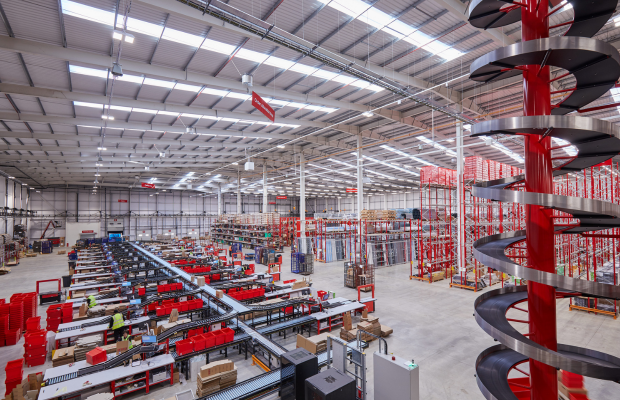

The challenge with manual operations
For decades, warehouses have relied on manual labour to move, sort, pick, pack, and dispatch products. While people remain an essential part of any operation, manual processes come with inherent limitations.
Labour dependency
Manual operations often require a large workforce to complete routine tasks. As order volumes increase, businesses typically need to recruit more staff, which can be challenging in today’s labour market.
Human error
Even the most experienced operators can make mistakes. Picking the wrong item, misplacing stock, or entering incorrect data can lead to costly errors, customer dissatisfaction, and unnecessary returns.
Limited operating hours
Manual operations are generally constrained by shift patterns, breaks, holidays, and workforce availability. Productivity often fluctuates throughout the day and across different shifts.
Health and safety risks
Repetitive lifting, walking long distances, and handling heavy loads can increase the risk of workplace injuries, fatigue, and absenteeism.
Automation: The championship-winning strategy
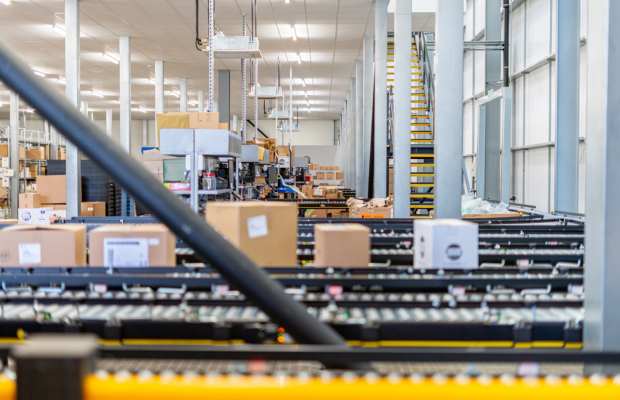
Warehouse automation transforms how materials and products move throughout a facility. By integrating conveyors, automated handling systems, intelligent controls, and other technologies, businesses can achieve levels of performance that manual operations simply cannot match.
1. Increased speed and throughput
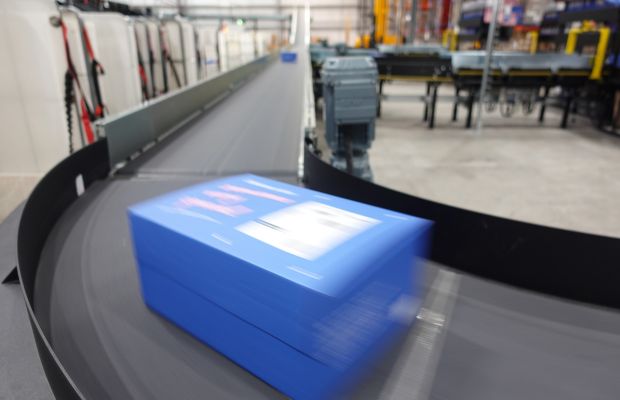
Automation works continuously and efficiently, moving products through the warehouse at a consistent pace.
Whether processing hundreds or thousands of orders per day, automated systems reduce bottlenecks and accelerate workflows, helping businesses meet growing customer expectations for rapid delivery.
Result: Faster order fulfilment and increased operational capacity.
2. Improved accuracy
Automated systems perform tasks with exceptional precision. Products are routed, sorted, and conveyed according to predefined processes, significantly reducing the likelihood of errors.
Result: Fewer picking mistakes, reduced returns, and improved customer satisfaction.
3. Enhanced safety
By automating repetitive and physically demanding tasks, businesses can reduce manual handling requirements and minimise employee exposure to potential hazards.
Automation allows warehouse staff to focus on higher-value activities while machinery handles the heavy lifting.
Result: A safer workplace with fewer accidents and injuries.
4. Greater efficiency
Unlike manual operations, automation doesn’t suffer from fatigue or inconsistency. Systems operate at the same high standard throughout every shift.
Automated processes also optimise the movement of goods, reducing wasted time and unnecessary travel distances within the warehouse.
Result: More productivity with fewer resources.
5. Extended operating hours
One of automation’s greatest advantages is its ability to operate for extended periods with minimal intervention.
While manual operations are limited by workforce availability, automated systems can continue processing orders around the clock when required.
Result: Increased output without proportionally increasing labour costs.
6. Consistency you can depend on
Customers expect reliable service every time they place an order. Automation delivers predictable performance regardless of volume fluctuations or seasonal demand spikes.
Result: Consistent service levels and improved operational reliability.

7. Scalability for future growth
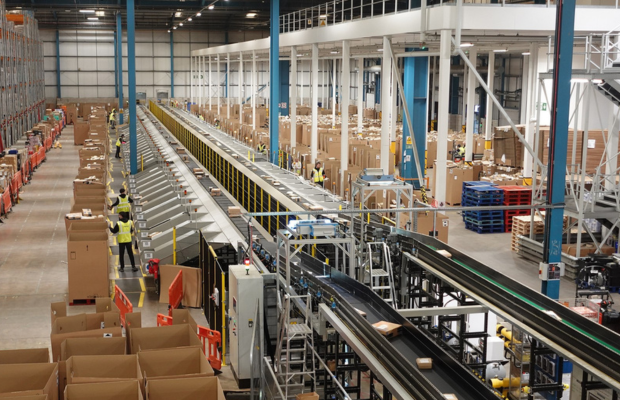
As businesses grow, manual operations often struggle to keep pace. Automation provides a scalable foundation that can accommodate increased throughput without requiring a proportional increase in labour.
Result: Sustainable growth and improved return on investment.
Finding the right balance
It’s important to recognise that automation isn’t about replacing people, it’s about enabling people to work smarter.
The most successful warehouses combine skilled employees with intelligent automation solutions. By allowing technology to handle repetitive, time-consuming tasks, staff can focus on problem-solving, quality control, customer service, and operational improvement.
The result is a stronger, more productive team both on and off the warehouse floor.
FINAL SCORE: Automation Wins!
Just as a winning football team relies on strategy, consistency, and performance, modern warehouses need the right systems in place to remain competitive.
Automation delivers significant advantages in speed, accuracy, safety, efficiency, consistency, and scalability. While manual operations still have a role to play, businesses looking to improve productivity and prepare for future growth are increasingly turning to automation as their preferred game plan.
The question isn’t whether automation can improve warehouse performance.
It’s whether your operation is ready to join the winning team.
Discuss your Project Requirements
Thank you for your interest in CSL Automation. As one of the UK’s leading conveyor and automation integrators, we can help maintain your automation system.
Start your automation journey today.
