
The right spare parts strategy should start with with one simple question: how much downtime can you afford?
When a conveyor, sortation or automation system is running reliably, spare parts can be easy to overlook.
Why hold stock for something that hasn’t failed?
The problem is that when a critical component does fail, the cost of not having the right spare available can be far greater than the cost of holding it in stock.
A few hours of downtime can quickly become a significant operational issue. Orders can build up, productivity can fall, service levels can be affected and, during peak periods, the consequences can be even more severe.
So the question shouldn’t simply be “What spares should we hold?”
It should be:
“How dependent are we on our system, and how much operational risk are we prepared to accept?”
Not every operation needs the same spares strategy
There is no universal spare parts list that works for every warehouse or distribution operation.
Your requirements will depend on several factors:
- How critical is the automation to your operation?
- What would happen if the system stopped for an hour, four hours or a full day?
- Do you have a practical manual workaround?
- How quickly can replacement parts be sourced?
- What are the typical lead times for critical components?
- How difficult are parts to install or configure?
- How much stock do you process through the system?
- How risk-averse is your operation?
An operation with a simple conveyor supporting a small percentage of throughput may take a very different approach to a highly automated distribution centre where the conveyor and controls infrastructure is fundamental to the entire operation.
The important thing is to make the decision before a failure forces you to make it.
A new system doesn’t mean your risk stays the same
One common assumption is that a new automation system doesn’t require significant spare parts because it is unlikely to fail.
While newer equipment can certainly provide excellent reliability, this doesn’t mean that a spare parts strategy isn’t required.
In fact, it is worth considering how your operation may change over time.
Perhaps today you have a manual process that can be used if the automation is unavailable.
But what happens in 12 months? Or 24 months?
Your volumes may have increased. Your workforce may have changed or even reduced. You may have introduced additional automation. You may have removed manual processes. Your customers may now expect faster despatch.
The same system that was once convenient may have become mission critical.
Your spare parts strategy should therefore consider not just your operation today, but where you expect it to be in the future.
Take a tiered approach to spare parts
One of the most effective ways to build a spare parts strategy is to divide components into different levels of criticality.
Rather than attempting to hold everything, you can prioritise the parts that present the greatest operational risk.
Tier 1 – Critical spares
These are the components where a failure could bring all or a significant part of your operation to a standstill.
Examples might include:
- Critical PLCs and control components
- Drives and inverters
- Important power supplies
- Safety controllers
- Critical sensors
- Components unique to your system
For these parts, the question isn’t simply whether they fail frequently.
It is:
“What happens if it fails and we don’t have one?”
If the answer is significant operational disruption, holding a spare may be justified even if the component has an excellent reliability record.
Tier 2 – Longer-lead-time spares
Some components may not be particularly likely to fail, but they can be difficult or slow to replace.
This is where lead time becomes just as important as failure frequency.
A component that can be delivered tomorrow presents a very different risk to one that takes four, eight or twelve weeks to source.
Consider holding stock of components where:
- Lead times are long
- The component is specialist
- There are limited suppliers
- The part requires configuration or programming
- The manufacturer has minimum order quantities
- The component is specific to your installation
The objective is to protect your operation from extended downtime, rather than simply stocking parts because they are expensive.

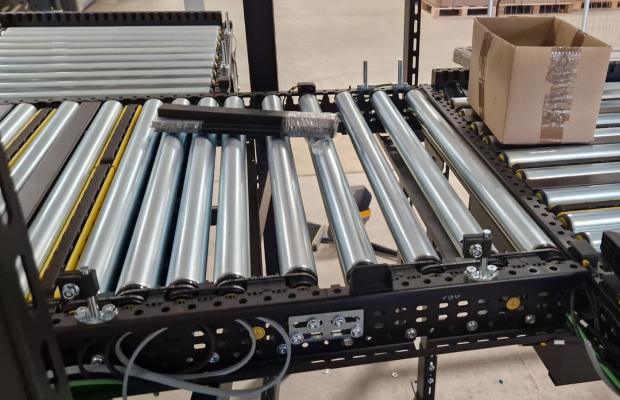
Tier 3 – Operational spares
These are components that are important to maintaining day-to-day reliability but are generally easier to source and replace.
Examples could include:
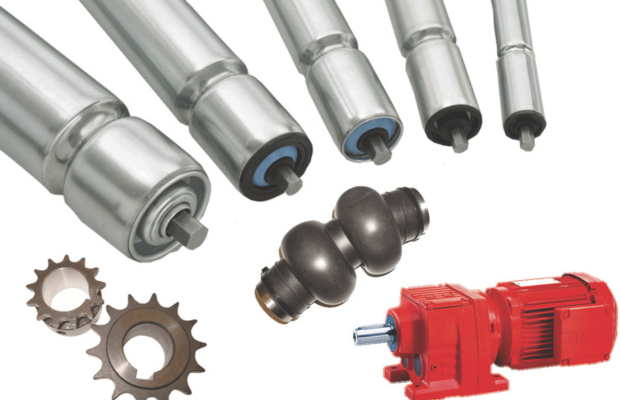
- Standard motors
- Rollers
- Bearings
- Belts
- Standard sensors
- Switches
- Common mechanical components
These parts may have shorter lead times and lower individual values, making them more practical to hold in sensible quantities.
They can also be particularly useful during planned maintenance, allowing engineers to replace worn components before they become failures.
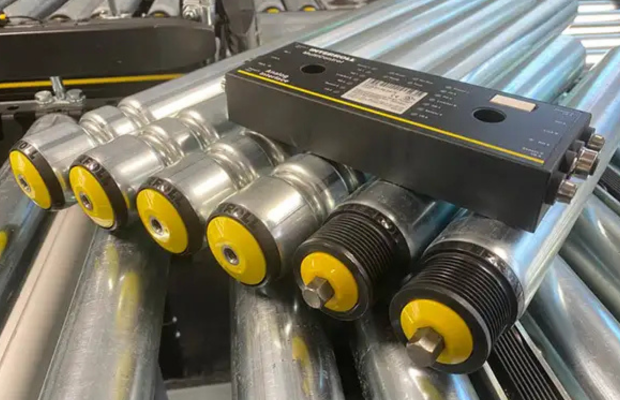
Tier 4 – Consumables and lower-criticality items
Finally, there are components that are relatively inexpensive, readily available and unlikely to create prolonged downtime if they aren’t immediately available.
These might include standard fixings, smaller consumables and other commonly available components.
You may not need to carry significant quantities of these parts on site.
However, knowing where they can be sourced and how quickly they can be delivered is still an important part of your overall strategy.

Don’t just look at the cost of the spare
One of the biggest mistakes when creating a spare parts strategy is focusing entirely on the purchase price.
A £50 component that stops a £10 million operation could be considerably more important than a £5,000 component that has a readily available replacement.
The real calculation is about risk.
Consider:
Cost of spare + storage + management
versus
Potential cost of downtime + lost productivity + service impact + emergency response + expedited parts + customer impact
Suddenly, holding the right spare can look like a very sensible investment.
Your spare parts strategy should evolve with your operation
Your system isn’t static.
Your spare parts strategy shouldn’t be either.
We recommend regularly reviewing:
System criticality
Has your dependence on automation increased?
Throughput
Are you processing more volume through the system?
Lead times
Have suppliers changed their availability or delivery times?
Obsolescence
Are any components approaching end-of-life?
System changes
Have modifications or upgrades introduced new components?
Business continuity
Would your existing contingency process still work?
Peak periods
Do you need additional protection during your busiest periods?
The right stock level today may not be the right stock level next year.
Build your strategy around risk, not guesswork
The objective isn’t to fill a storeroom with every component that could possibly fail.
It’s to identify the parts that matter most.
A good spare parts strategy considers failure probability, system criticality, replacement lead time and the consequences of downtime.
At CSL Automation’s ConveyorCare, we can help you assess your system and develop a practical, tiered spare parts strategy based on your operation.
We can help identify:
- Which components are critical to your system
- Which parts have potentially significant lead times
- Which spares are worth holding on site
- Appropriate quantities and stock levels
- Obsolete or difficult-to-source components
- Opportunities to reduce unnecessary inventory
- The parts that could make the biggest difference to recovery time
Don’t wait for a failure to tell you what you should have in stock. The best time to identify your critical spares is before you need them, because ultimately, spare parts aren’t just about replacing components.
Speak to our ConveyorCare team today
Discuss your Project Requirements
Thank you for your interest in CSL Automation. As one of the UK’s leading conveyor and automation integrators, we can help maintain your automation system.
Start your automation journey today.
