
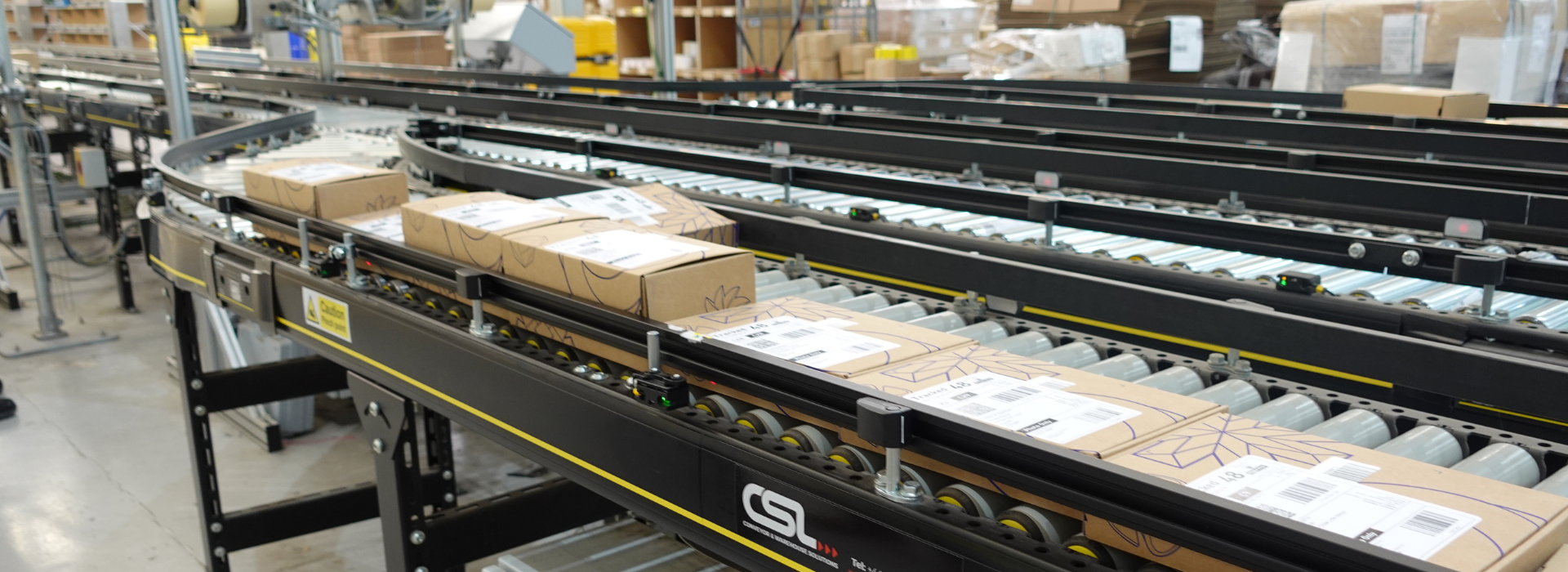
Picking? Packing? Dispatch? Returns? Throughput? Labour? Space?
Every eCommerce operation has its pressure points.
For some businesses, it’s finding enough people to pick orders during peak periods. For others, it’s getting orders packed quickly enough, reducing errors, managing returns or simply trying to get more throughput from an existing warehouse footprint.
And sometimes the biggest challenge isn’t a single process at all, it’s how all the individual processes work together, or not in some cases.
So, what’s the biggest challenge in your operation right now?
At CSL Automation, we work with ecommerce and logistics businesses to understand those challenges and design automation solutions around them.
We are completely equipment and technology agnostic, which means we can recommend the right solution for the application rather than trying to make the application fit a particular manufacturer’s equipment.
Here are some of the key areas where we see automation making a difference.
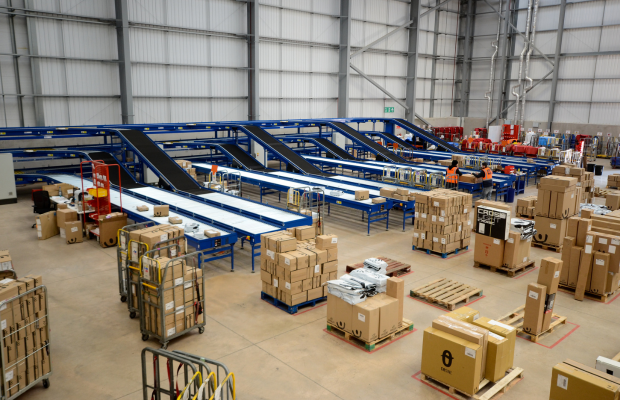
1. Picking. Too much time, Too much labour?
Picking is often one of the biggest operational costs in ecommerce.
As order volumes increase, businesses can find themselves adding more people simply to keep up. That can work for a while, but it can also create problems around recruitment, productivity, travel time and peak-period labour requirements.
How automation can help:
Automation can reduce the amount of walking and manual handling required by bringing products or totes to operators, automatically transporting orders between processes, or using technologies such as goods-to-person systems, automated storage and retrieval, conveyors and sortation.
The objective isn’t necessarily to remove people from the process. It is often about helping your existing team process more orders, more efficiently.
2. Packing. Can you keep up with the picking?
Getting products picked is only part of the challenge.
If packing becomes a bottleneck, everything upstream can be affected. Orders can queue, operators can become overloaded and dispatch deadlines can come under pressure.
How automation can help:
Automated conveyor systems can move orders efficiently between picking and packing stations, while technologies such as automated carton erection, sealing, weighing, dimensioning, labelling and auto packing can reduce repetitive manual tasks.
The result can be a more consistent packing process with greater capacity and fewer opportunities for error.
3. Sortation. Getting the right order to the right place
As order volumes increase, manually sorting products, totes or parcels can become increasingly difficult.
Whether you’re sorting by carrier, destination, order, service level or another operational requirement, manual sortation can consume significant amounts of labour and space.
How automation can help:
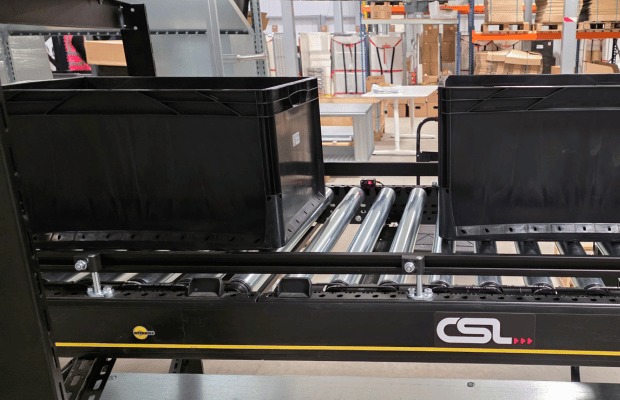
Automated sortation systems can identify and divert products, totes or parcels to the correct destination.
Depending on the application, this could involve technologies such as cross-belt, sliding-shoe, pop-up wheel, narrow-belt or tilt-tray sorters.
The right technology depends entirely on the products, throughput, layout and required performance, which is why choosing the technology after understanding the application is so important.
4. Dispatch. Can you hit your cut-off times?
The final stages of an order journey can be some of the most time-critical.
Orders need to be consolidated, checked, labelled, sorted and transferred to the correct carrier, often against tight collection deadlines.
How automation can help:
Conveyor and sortation systems can automate the movement and routing of completed orders, while scanning and identification technologies can help ensure parcels reach the correct dispatch lane and even into a vehicle.
Automation can help create a smoother flow from packing through to carrier handover and provide greater capacity when order volumes increase
5. Returns. The Process nodody wants to deal with
Returns are an unavoidable part of eCommerce.
They can also be labour-intensive, involving unloading, identification, inspection, checking, grading, repacking, restocking and routing.
How automation can help:
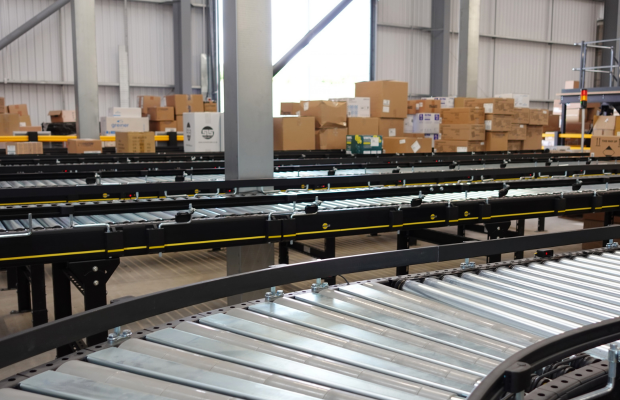
Conveyors, scanning systems, automated identification and warehouse technologies can help create a more structured returns process.
Automation can move returned products between processing stages while systems can help determine where each item needs to go next, whether that’s back into stock, refurbishment, recycling or another process.
A well-designed returns operation can turn a necessary cost into a much more efficient process.
6. Replenishment. Keeping stock where it needs to be
Picking performance is only as good as the availability of stock.
If pick locations regularly run empty, operators may need to stop picking, wait for replenishment or make additional journeys around the warehouse.
How automation can help:
Automated storage, conveyors and warehouse control systems can help move stock between storage, replenishment and picking areas.
The right solution can reduce unnecessary movement and help ensure inventory is available where it is needed.


7. Storage. Are you running out of space
Returns are an unavoidable part of eCommerce.
They can also be labour-intensive, involving unloading, identification, inspection, checking, grading, repacking, restocking and routing.
How automation can help:
Conveyors, scanning systems, automated identification and warehouse technologies can help create a more structured returns process.
Automation can move returned products between processing stages while systems can help determine where each item needs to go next, whether that’s back into stock, refurbishment, recycling or another process.
A well-designed returns operation can turn a necessary cost into a much more efficient process.
8. Throughput. Can your operation handle growth?
Perhaps your biggest problem isn’t today’s volume.
It’s whether your operation can handle tomorrow’s.
A system that works perfectly at 5,000 orders per day may struggle considerably at 10,000 or 20,000.
How automation can help:
Automation can provide additional processing capacity while creating a more predictable flow through the operation.
The important consideration is designing for the right combination of current demand, peak demand and future growth rather than simply automating today’s bottleneck.
9. Labour. Can you recruit enough people?
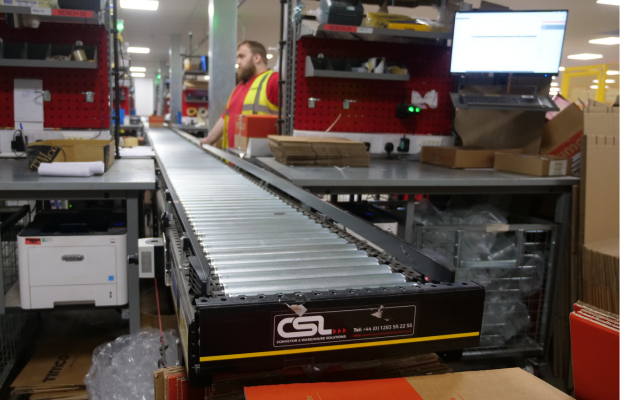
Labour availability continues to be a major consideration for many warehouse operations.
Recruitment, training, retention, absenteeism and peak-period staffing can all have a significant impact on operational performance.
How automation can help:
Automation can take on repetitive, physically demanding or predictable tasks, allowing people to focus on activities where human judgement and flexibility are more valuable.
The best solutions aren’t always about replacing people.
They are about making the people you already employ more productive.
10. Accuracy. How much does an error cost you?
An incorrect pick, misplaced tote or incorrectly sorted parcel can have consequences far beyond the original mistake.
It can mean additional handling, customer complaints, returns, rework and increased operational costs.
How automation can help:
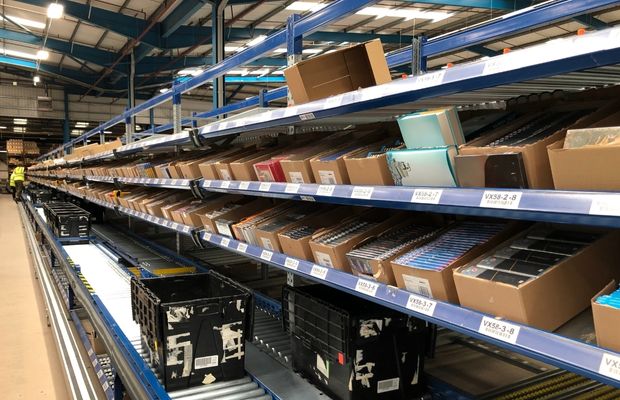
Scanning, identification, tracking and automated routing can introduce greater control and consistency into material flows.
Automation can help ensure that the right product follows the right process and reaches the right destination.
11. Visibility. Do you know where your orders are?
Modern ecommerce operations need more than physical automation.
They need information.
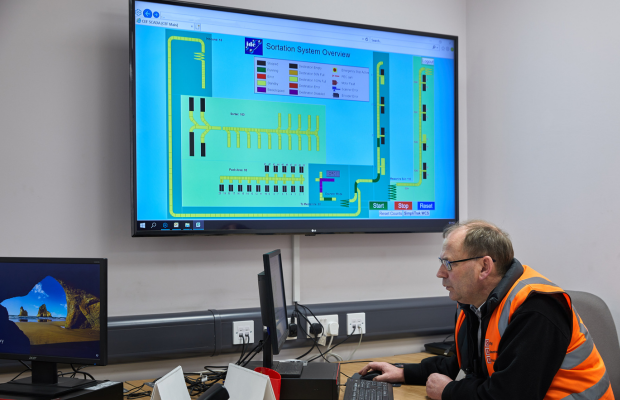
Knowing what is moving through the warehouse, where bottlenecks are occurring and whether the operation is achieving the required throughput can be critical to making good operational decisions.
How automation can help:
Warehouse control systems, sensors, scanners and system integration can provide greater visibility of material flows and operational performance.
This can help Operations teams move from reacting to problems to identifying and managing them proactively.
12. Integration. Does everything work together?
This is often where automation projects become particularly challenging.
A warehouse might have conveyors, scanners, WMS software, picking technology, packing equipment, sortation and carrier systems, all from different suppliers.
Getting everything to work together is critical.
How automation can help:
A well-designed automation system brings the individual technologies together into one coordinated material flow.
That means considering not just the conveyor, robot or sorter, but the complete operational process and the interfaces between each stage.
So, what’s your biggest problem?
There is no single piece of automation that is right for every ecommerce operation.
A high-volume fashion fulfilment centre may need a very different solution from an operation handling large, bulky products. A business dealing with thousands of SKUs will have different requirements from one with a relatively small product range.
That’s why CSL Automation takes an independent, agnostic approach.
We don’t start with a particular conveyor, robot, sorter or automation technology and try to find somewhere to put it.
We start with the problem.
We look at your operation, understand the challenges, analyse the material flows and identify where automation can deliver genuine operational benefits.
From there, we can evaluate the technologies and equipment available and develop a solution that is appropriate for the application — rather than being tied to a particular manufacturer or technology.
Our experience covers the design, integration and installation of automated material handling and warehouse systems, giving us a practical understanding of what it takes to turn an automation concept into a working operation.
What would you automate first?
You don’t necessarily need to automate the whole warehouse.
Sometimes the biggest improvement can come from identifying one particular bottleneck and solving it properly.
If you’d like to explore where automation could make a difference in your operation, talk to CSL Automation.
Independent. Technology agnostic. Experienced in automation design and installation.
Let’s start with your problem, and work backwards to the right solution.
Discuss your Project Requirements
Thank you for your interest in CSL Automation. As one of the UK’s leading conveyor and automation integrators, we can help maintain your automation system.
Start your automation journey today.
