
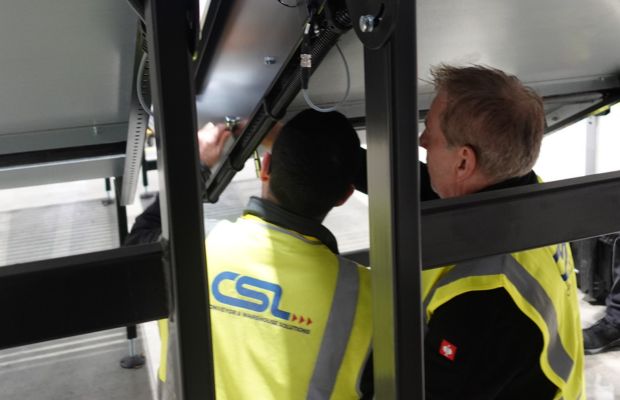
From manual to automated: How CSL Automation guides you through every step
What is conditional monitoring?
Conditional monitoring is the continuous or periodic collection of equipment condition data (vibration, temperature, motor current, belt tension, acoustic signatures, etc.) to determine the actual health of components and assemblies. It differs from simple scheduled checks because it reacts to the real state of the asset.
How it helps operational efficiency:
- Early fault detection: Detects deviations from normal operating parameters before they develop into catastrophic failures.
- Optimised maintenance scheduling: Maintenance is performed only when data indicates it’s required, reducing unnecessary interventions and spare parts usage.
- Longer asset life: By addressing root causes and trending deterioration, components are replaced or adjusted before secondary damage occurs.
- Improved throughput and safety: Fewer unexpected stoppages and safer operating conditions for staff and machines.
In conveyor systems, conditional monitoring often focuses on bearings, gearbox temperatures, motor current, belt alignment and roller vibration, all early indicators of impending problems.
The current state: Where ConveyorCare starts
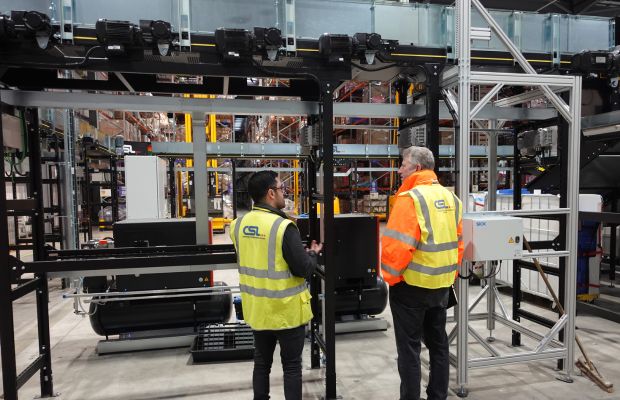
ConveyorCare currently has a team of skilled engineers, structured service visits and targeted sensor installs to deliver high availability for our customers. We combine hands-on inspection with data from condition sensors and maintenance history to produce actionable maintenance plans.
But technology is improving and allowing better servicing all the time. Smarter sensors, better connectivity and more powerful analytics mean predictive maintenance is moving from an expert-driven process into an automated, scalable system that any operations team can use.
Future trends in predictive maintenance
1. Expanded Conditional Monitoring
- More and better sensors (vibration, ultrasonic, thermal imaging, IoT-enabled current sensors) deployed across conveyors will provide higher-fidelity insights. Higher sensor density means issues can be localised quickly and root causes identified with greater confidence.
2. AI & Machine learning for anomaly detection
- Machine learning models will learn a system’s normal behaviour and flag subtle deviations that human checks may miss. This reduces false positives and improves detection lead time.
3. Edge computing (real-time, on-site analytics)
- Performing initial analytics at the edge reduces bandwidth, lowers latency for critical alarms and ensures the system can function even with intermittent connectivity.
4. Digital twins
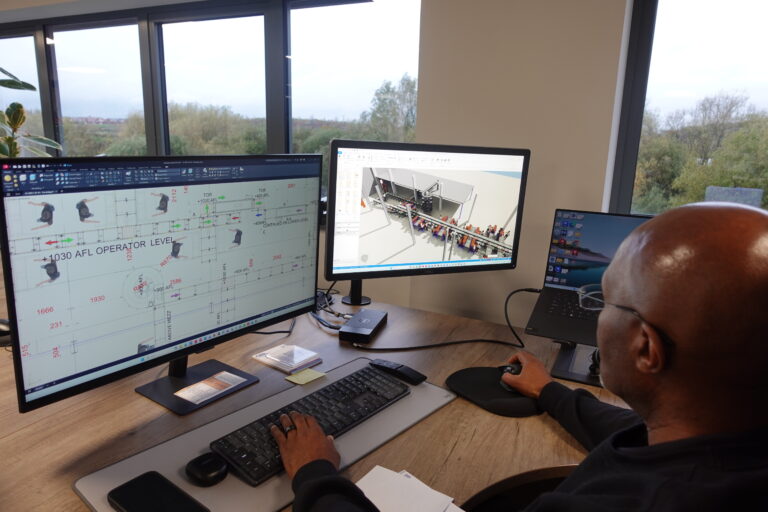
- Virtual replicas of conveyor systems allow teams to simulate wear, test remedial strategies and predict how changes (e.g., increased throughput) will affect failure rates.
5. Prescriptive Maintenance
- Going beyond prediction, prescriptive systems recommend specific actions (tighten, lubricate, replace, adjust) and estimate the remaining useful life of parts.
6. Augmented Reality (AR) for Maintenance
- AR-enabled instructions, overlaid on the equipment for field technicians, speed up repairs, reduce human error and make knowledge transfer faster.
7. Autonomous Inspection (robots and drones)
- Mobile robots and drones equipped with cameras and sensors can perform routine inspections in hazardous or hard-to-reach areas, enabling more frequent checks without draining technician time.
7. Autonomous Inspection (robots and drones)
- Mobile robots and drones equipped with cameras and sensors can perform routine inspections in hazardous or hard-to-reach areas, enabling more frequent checks without draining technician time.
8. Ubiquitous Wireless Connectivity & 5G
- Faster, reliable connections support real-time monitoring across large facilities and enable richer data streams from numerous sensors.
9. Integrated asset management & Lifecycle contracts
- Predictive maintenance will be bundled into lifecycle service agreements, enabling predictable costs and aligning incentives between supplier and customer for asset longevity.
10. Cybersecurity for IoT
- As connectivity grows, protecting sensors, edge devices and control networks becomes essential to keep PdM systems trustworthy and reliable.
11. Sustainability & energy optimisation
- PdM will increasingly include energy and emissions monitoring, helping teams run conveyors more efficiently, reduce waste and meet ESG goals.
12. Regulatory and standards alignment
- Industry standards for data formats, interoperability and safety will make it easier to scale PdM systems across multi-vendor sites.
Getting Started
Assess maturity: Start with a quick survey of asset criticality, failure modes and current data collection.
- Pilot conditional monitoring: Install targeted sensors on high-value or high-risk conveyors to validate value.
- Instrument edge analytics: Combine on-site preprocessing with cloud analytics for scalable insights.
- Deploy AI models incrementally: Use historical failure data where available; begin with anomaly detection and expand to prescriptive recommendations.
- Train staff and streamline processes: Ensure maintenance teams understand alerts, SLA expectations and corrective workflows.
- Scale and standardise: Expand sensor coverage, normalise data formats and integrate PdM into your CMMS/ERP.
Common Pitfalls (and how CSL helps avoid them)
- Over-sensorisation: Installing sensors everywhere without clear purpose can create noise . CSL helps target high-value monitoring points.
- Alert fatigue: Too many false positives undermine trust, we combine tuned analytics and human validation to keep alerts meaningful.
- Siloed data: Making PdM a standalone island prevents full value realisation, we integrate insights into maintenance workflows and asset registers.
- Neglecting cybersecurity: We include secure connectivity and access controls in all ConveyorCare deployments.
Conclusion
Predictive maintenance is no longer a futuristic concept, it’s a practical, proven strategy that transforms how conveyor and automation systems are supported. By combining conditional monitoring with AI, edge analytics and practical maintenance workflows, organisations can move from firefighting to foresight.
At CSL Automation, our ConveyorCare programme is designed to take you on that journey: targeted pilots, measurable ROI and a pragmatic scaling plan that protects your operations today while preparing you for tomorrow.
Contact our team:
- Email: [email protected]
- Phone: 01283 55 22 55
Discuss your Maintenance Requirements
Thank you for your interest in CSL Automation. As one of the UK’s leading conveyor and automation integrators, we can help maintain your automation system.
Start your automation journey today.
